
About the Building Science Group
Every home has a story. Ours started with listening to them.
Melinda and Bill McKnight didn't set out to become house detectives. But after years in the field, that's exactly what they became.
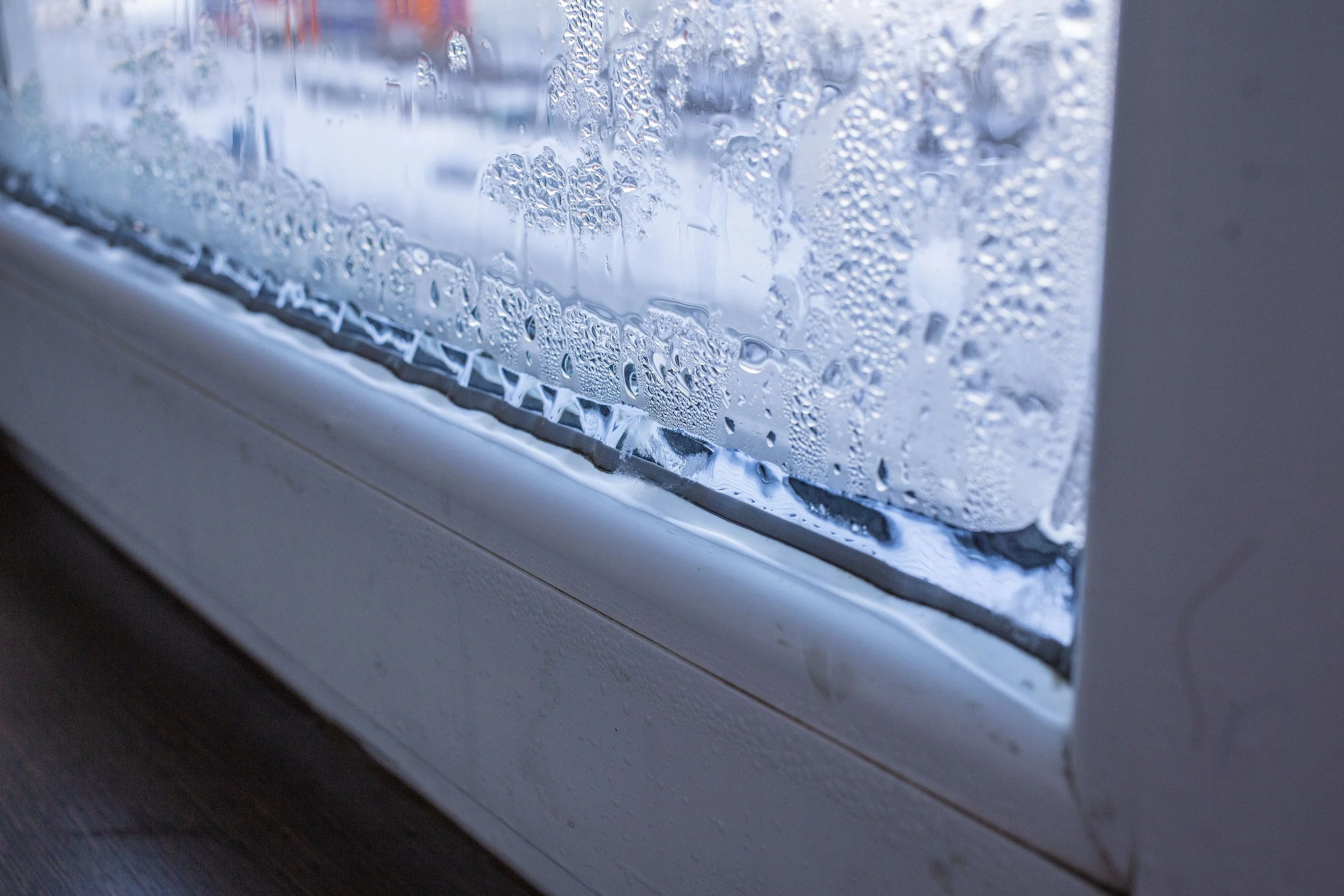
It started with a case that changed how they thought about buildings entirely. An 18-inch band of ice kept forming inside the primary bedroom of a three-year-old, multimillion-dollar home, climbing a wall of 12-foot windows. Other professionals had looked at it and walked away stumped. When Melinda and Bill investigated, they found that the windows had been framed differently from the architect's plans. Outside air was entering beneath them and cooling the aluminum cladding, while warm air from a heating vent rose across the glass, creating a cycle of condensation and freezing.
It wasn't a mystery. It was physics. And once they knew where to look, the answer was right there in the building itself.
That case, and dozens like it, is why The Building Science Group exists. For nearly two decades, Melinda and Bill have approached buildings differently than most inspectors do. They don't just look. They test, measure, and investigate using the same principles of physics, chemistry, and thermodynamics that explain how heat, air, and moisture move through a structure.
"We're like house detectives," Melinda says. "We use diagnostic testing and applied building science to figure out what is actually happening."
That distinction matters. A problem that looks simple on the surface (a musty smell, a cold room, a stubborn stain) often starts somewhere else entirely: a draft pulling insulation particles from the attic, an improperly vented crawlspace, condensation from an unsealed electrical box. Standard inspections check boxes. Building science asks why.
Every inspection, backed by science.
“We’re like house detectives, we use diagnostic testing and applied building science to figure out what is actually happening.”
No two buildings are the same. Every structure is as unique as a fingerprint, and Melinda and Bill treat each one that way, looking at the whole picture rather than isolated symptoms.
"You have to look at the whole building," Melinda says. "We take a holistic approach to finding answers and solutions. Everything affects everything else."
That means identifying the problems that already exist and anticipating the ones that haven't surfaced yet. Whether it's a historic home, new construction, or a major renovation, the approach stays the same: understand the building as a system, not a checklist.
A holistic approach, because every building is one connected system.

Most inspectors hand over a report and move on. The Building Science Group doesn't walk away after the report.
Once a problem is diagnosed, they develop a detailed plan of work and stay involved through completion, verifying that the recommended materials and methods aren't just specified but actually executed correctly. For homeowners, that means the confidence of knowing their investment was done right before they pay for it. For architects and builders, it means a partner who reviews plans, verifies code compliance, conducts testing, and makes sure what was designed is what actually got built.
Diagnose. Plan. Verify.
The McKnights' diagnostic toolbox includes blower-door testing, infrared cameras, moisture meters, smoke tracers, borescopes, combustion analysis, air quality monitors, and laboratory mold testing, alongside full home inspections for buyers, sellers, and new construction.
Indoor air quality has become an increasingly central part of the work. In one case, a renter had installed multiple air purifiers but kept feeling ill at home. Testing revealed that incorrectly installed insulation and a vapor barrier had trapped moisture against a wood floor, and a chemical reaction between the damp wood and its finish was producing acetone. Removing the faulty materials let the floor dry and stopped the problem at the source.
Other investigations have uncovered unsafe formaldehyde levels and traced carbon monoxide poisoning back to a water heater vent that violated code. Each time, testing turned a mysterious health problem into a correctable building problem.
From structural mysteries to indoor air-quality.
Melinda and Bill also share what they know. Through partnerships with Communities for Local Power, Mid-Hudson Energy Transition, and Sustainable Hudson Valley, they teach building science basics and help create healthier homes across the region they call home.
After over two decades in business, a new name (The Building Science Group) reflects what's always been true about the work: listening to what buildings are saying, and grounding every answer in science.
Rooted in the Hudson Valley, grounded in science.
Reach out to us to learn more about BSG.
We take pride on our work and give you the most unbiased, scientific discoveries and answers for home inspections, indoor air-quality and more.
All buildings have answers. We find them.
Proudly serving the Hudson Valley for years, formerly known as Energy Conservation Services.